Cheese Culture for Brie
Brie is a mesophilic cheese wearing a mould coat. The starter acidifies the milk; Penicillium candidum grows the white rind; Geotrichum prepares the surface and keeps bitterness down. Camembert uses exactly the same cultures — the difference is wheel size and ageing, not the packet.
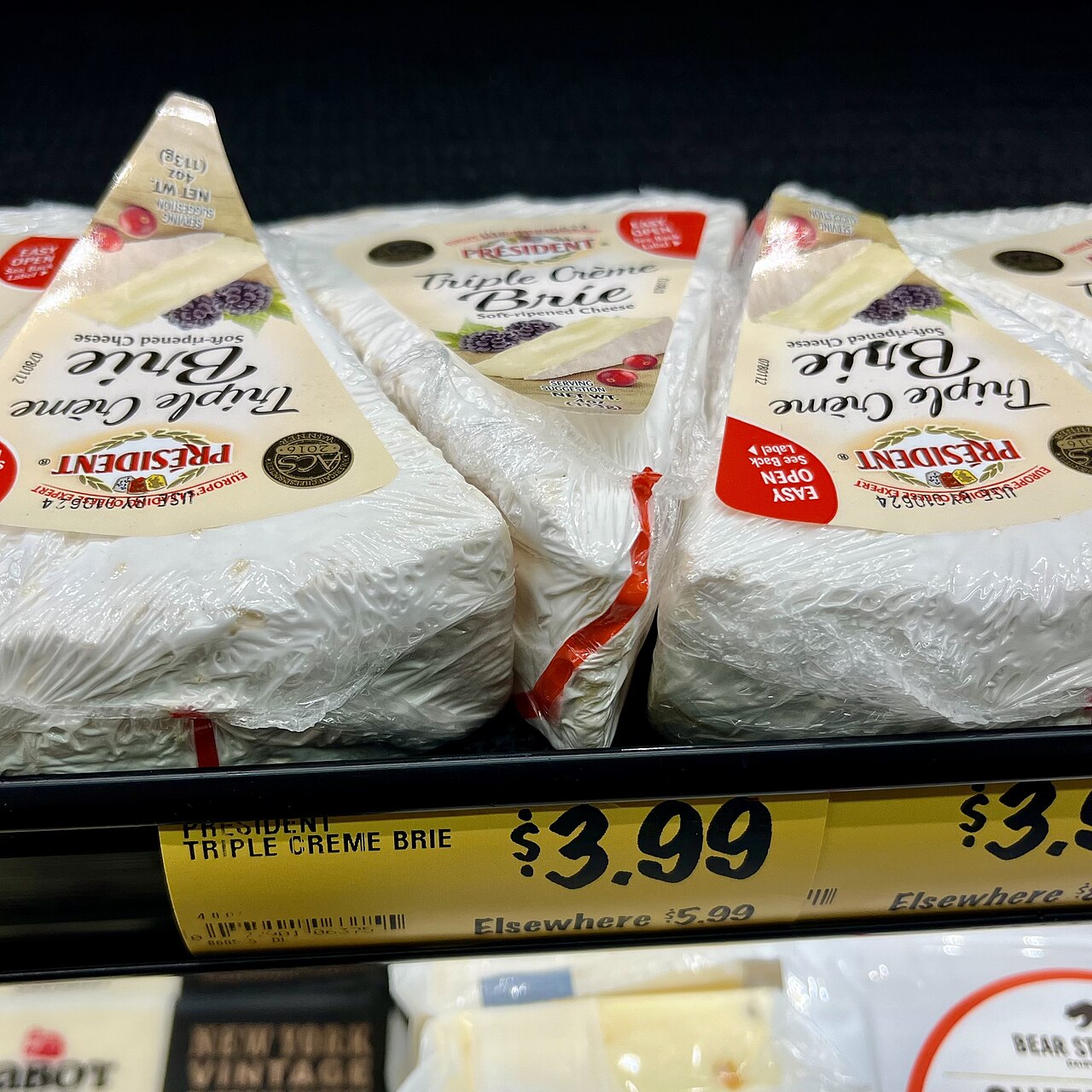
Brie ripening on the shelf. Photo: Wikimedia Commons — see credits.
At a glance
| Family | Soft-ripened · Mesophilic |
| Primary culture | MM 100 or Flora Danica |
| Adjuncts | Penicillium candidum + Geotrichum candidum |
| Temperature logic | Ripen the milk around 84–90°F; never cooked hot — mesophilic throughout |
| pH notes | Surface pH climbs from about 4.7 at salting toward 6.8–7.4 as the mould ripens the paste |
| Ageing | Age about 4–6 weeks in a cool, humid cave (around 50–55°F, high humidity) until the paste softens to the rind |
The shopping list
Choozit MM 100 Mesophilic Culture
Penicillium candidum SAM3 — White Mould Culture
Geotrichum candidum — Rind Culture
The make, in short
Ripen the milk around 84–90°F; never cooked hot — mesophilic throughout. Age about 4–6 weeks in a cool, humid cave (around 50–55°F, high humidity) until the paste softens to the rind.
The one pitfall
Skipping the Geotrichum. PC alone gives a thinner, more bitter rind — the pair is the classic recipe for a reason.
Making a different cheese next?
The Culture Finder covers 27 cheeses and cultured staples — starter, adjuncts, temperature logic and pH gates for each.