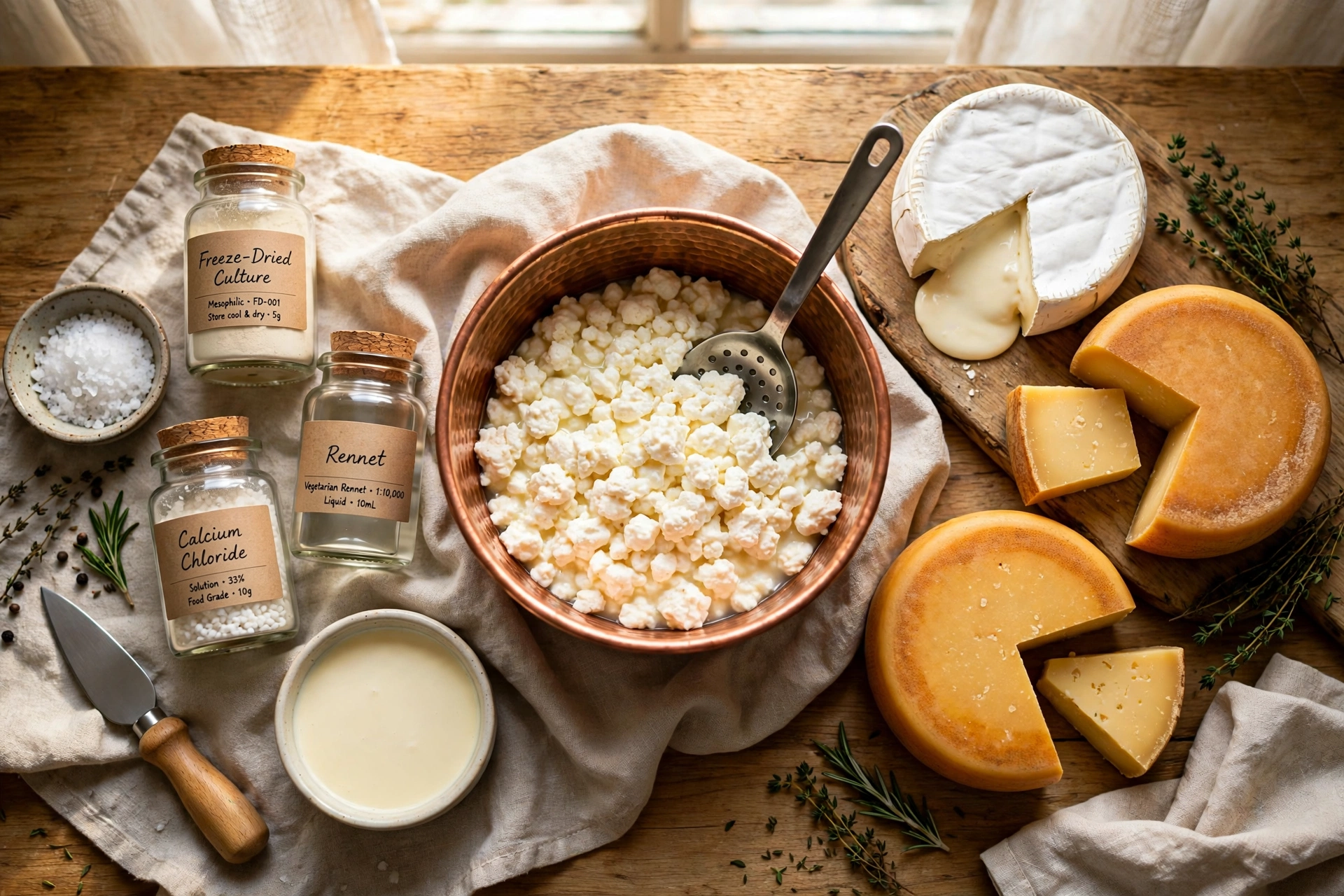
Find the right culture for every cheese.
Cheddar is mesophilic. Parmesan is thermophilic. Brie needs two extra cultures most recipes bury in the fine print — and halloumi needs none at all. We match every cheese to its starter, its adjuncts and its dose, with prices checked at the specialist suppliers.
Start with the cheese, not the catalogue
Pick what you are making — we will tell you exactly what to buy, and what you can skip.
The Culture Finder does the thinking
Twenty-seven cheeses and cultured staples, each mapped to its culture family, the specific packets worth buying, the adjuncts that are actually required, the temperature logic and the pH number that decides success. It also knows the exceptions — like the famous grilling cheese that uses no culture at all.
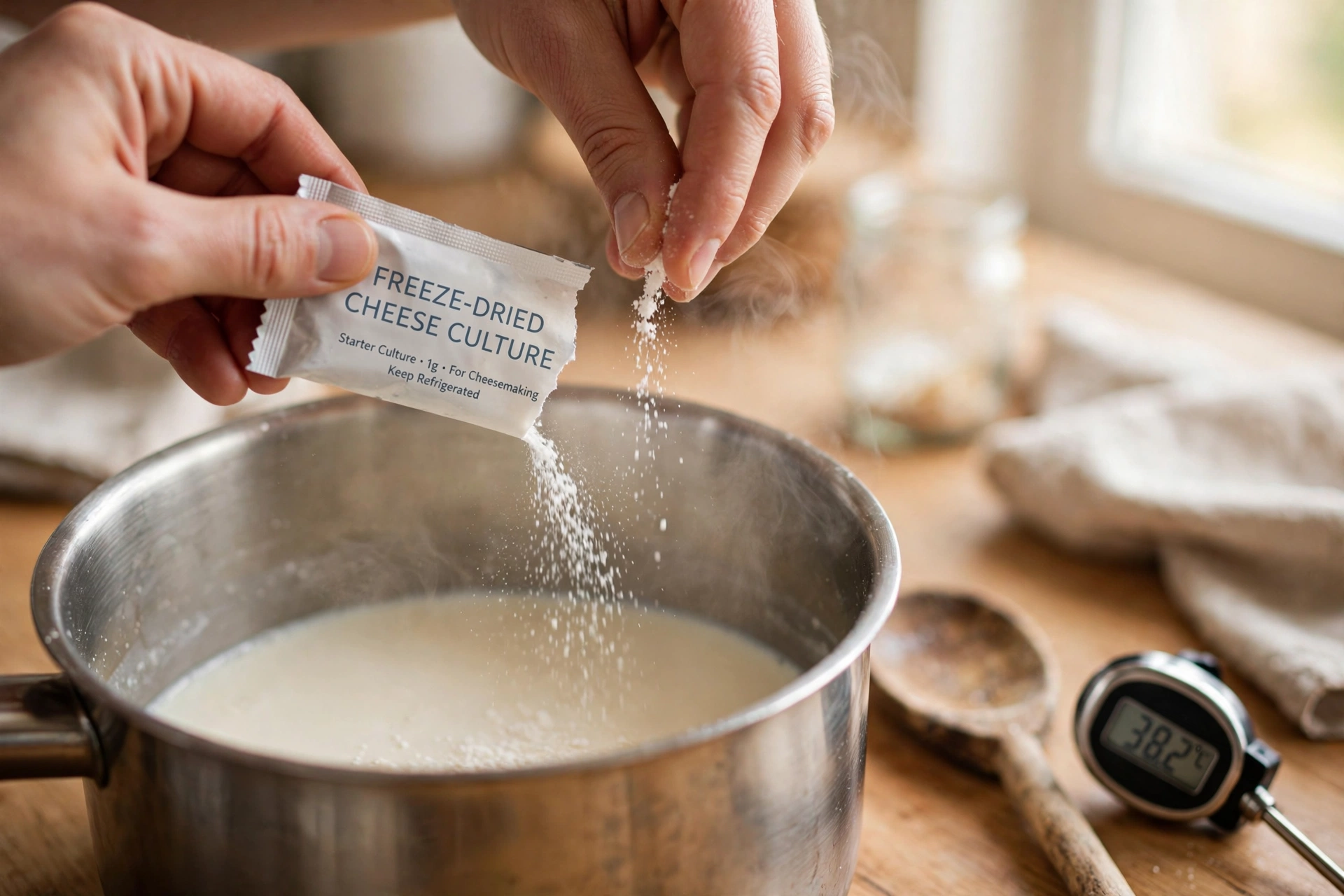
Cultures our readers buy first
Mesophilic Starter Culture (5-Pack)
New England Cheesemaking · 5 single-use packets · 1 packet per batch, up to 2 gallons
Buy at New England Cheesemaking
Full guide & dosage →Flora Danica Mesophilic Culture
Chr. Hansen · Pack as listed at retailer (pack sizes vary by retailer — check the listing)
Buy at New England Cheesemaking
Full guide & dosage →Choozit MA 11 Mesophilic Culture
Danisco Choozit (IFF) · 50 DCU foil pack · inoculates large batches — home makers split it into 6–12 gallon batches
Buy at New England Cheesemaking
Full guide & dosage →Choozit TA 61 Thermophilic Culture
Danisco Choozit (IFF) · Foil pack as listed at retailer
Buy at New England Cheesemaking
Full guide & dosage →Penicillium candidum SAM3 — White Mould Culture
Danisco Choozit (IFF) · 2 Dose $9.95 · 10 Dose $15.95
Buy at New England Cheesemaking
Full guide & dosage →Mesophilic Direct-Set Starter Culture
Cultures for Health · 4 packets + 2 rennet tablets included
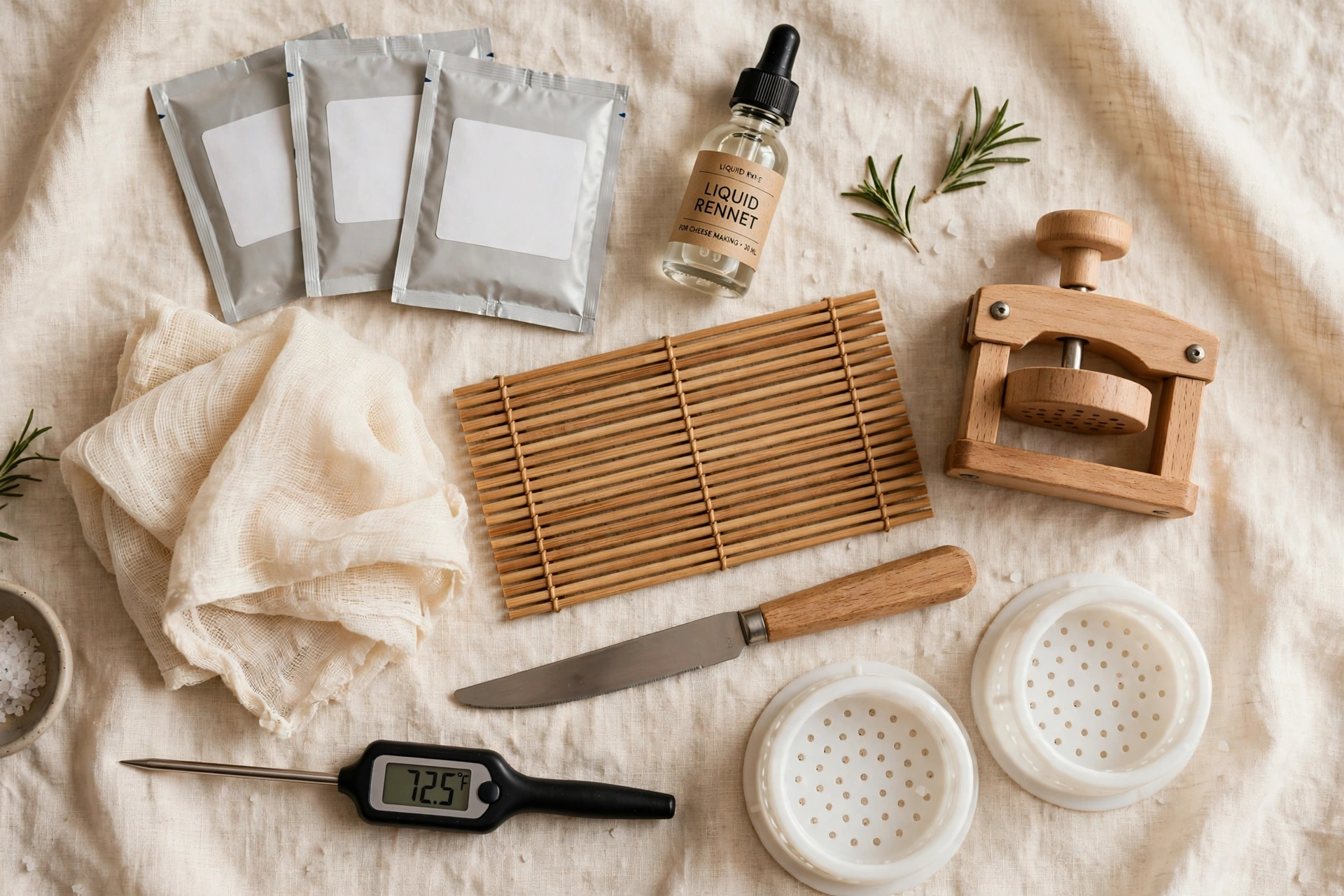
New to this? The kit is the shortcut
A good starter kit packs the thermometer, rennet, salt and cloth you would otherwise forget — a first mozzarella the same afternoon it arrives. We checked what is actually inside every kit we list, from the $27.95 classic to the $599 smart cheesemaker.
Then comes the cave
Aged cheese wants 50–55°F and humid air. A wine fridge gives you the temperature and, honestly, only the temperature — our cave guide covers the humidity fix that makes it a real cheese cave, plus the pH meters and presses worth graduating to.
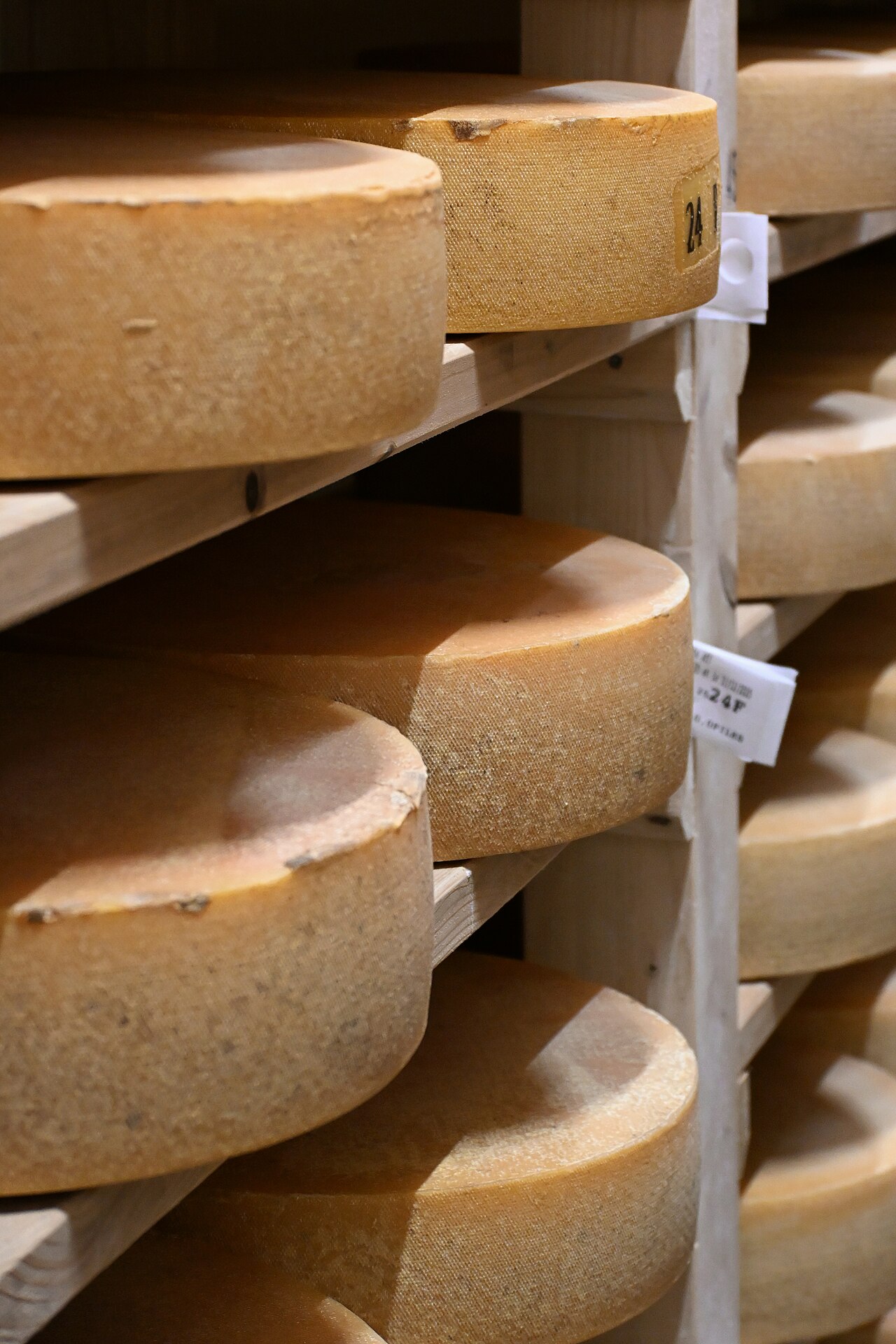
Wheels aging in a ripening cellar. Photo: Wikimedia Commons — see credits.
The Culture Letter
One practical email a month: the culture of the season, a make worth trying, dose and storage reminders, and price checks on the packs we track. No spam, unsubscribe anytime.