Rennet & Supplies
Cultures make the acid. These make the curd — and everything after it.
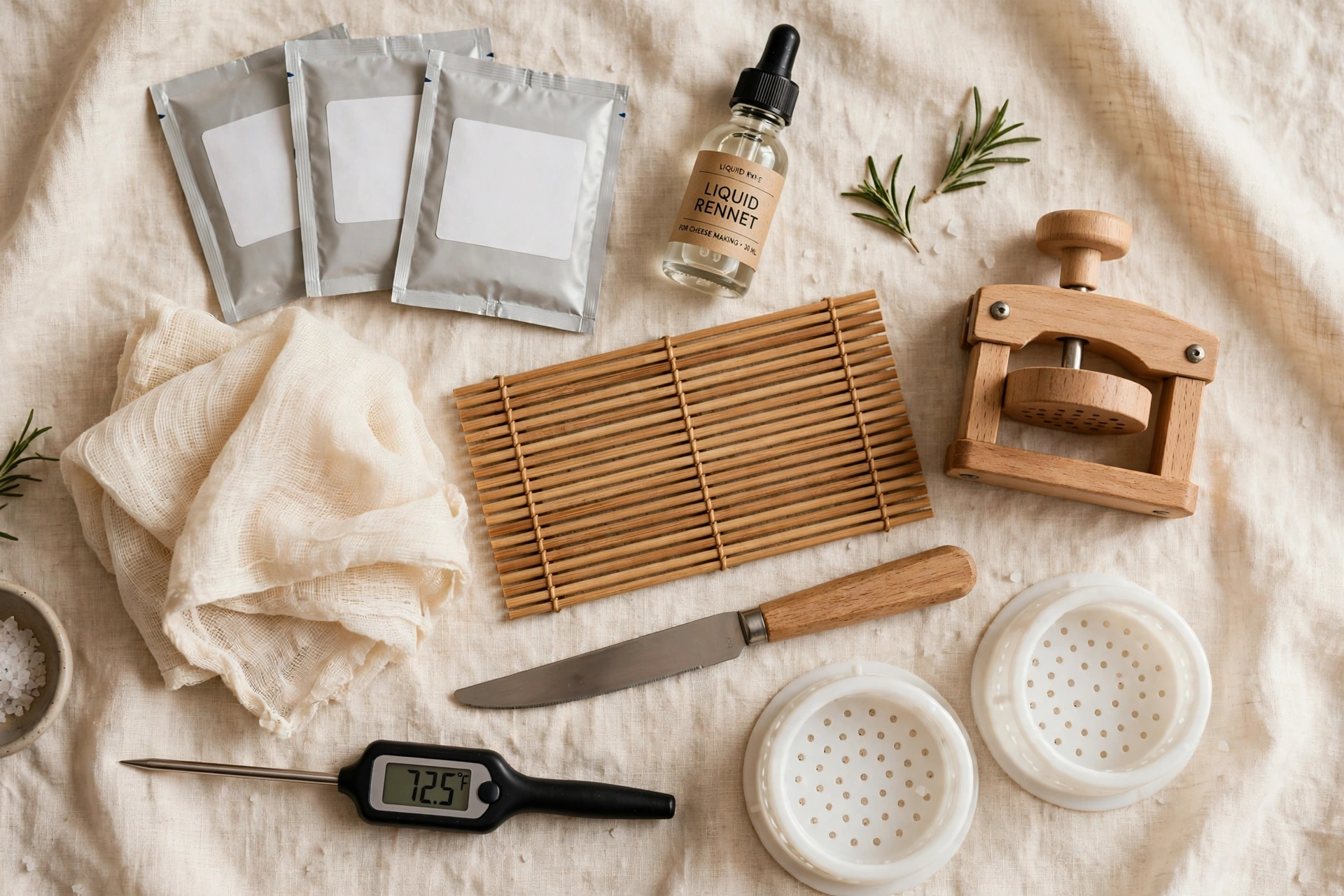
Liquid Animal Rennet
Calf rennet, the traditional choice — retailer guidance calls it the best choice for longer-aged cheese. Dilute in cool, non-chlorinated water and add promptly. Typical single-strength dose: 1/4 tsp per gallon.
Organic Liquid Vegetable Rennet
Microbial rennet from Mucor miehei — the vegetarian default. Reliable for fresh and shorter-aged cheeses; retailer guidance warns it can add a slight bitterness in cheeses aged past about 6 months.
Vegetable Rennet Tablets
Shelf-stable tablets — about a year at room temperature, 5+ years frozen per retailer kit guidance. Important: tablet strength differs by brand (one brand's half-tablet sets 2 gallons, another's full tablet sets 1) — always dose by your brand's packet.
Calcium Chloride
Restores the calcium balance that pasteurization and homogenization disturb, for a firmer curd set with store-bought milk. Typical dose: 1/4 tsp per gallon, diluted in 1/4 cup water. Skip it for mozzarella — it can prevent stretching.
Cheese Salt
Non-iodized flake salt made for cheese. Iodine in table salt can inhibit your cultures — this is the salt to salt a wheel with.
Cheese Colouring (Annatto)
Annatto colour for the classic orange of cheddar, Colby and Red Leicester styles. A few drops in the milk, before the culture works.
Citric Acid
For direct-acid mozzarella and ricotta — the 30-minute method with no culture at all. A different path from cultured mozzarella; both are in our mozzarella guide.
Which rennet? The 20-second version
Aging past six months: calf rennet or FPC. Vegetarian or short-aged: microbial rennet is a true equivalent. Hate measuring drops: tablets, dosed by your own packet. The full story is in our rennet guide and best rennet picks.
The Culture Letter
One practical email a month: the culture of the season, a make worth trying, dose and storage reminders, and price checks on the packs we track. No spam, unsubscribe anytime.